
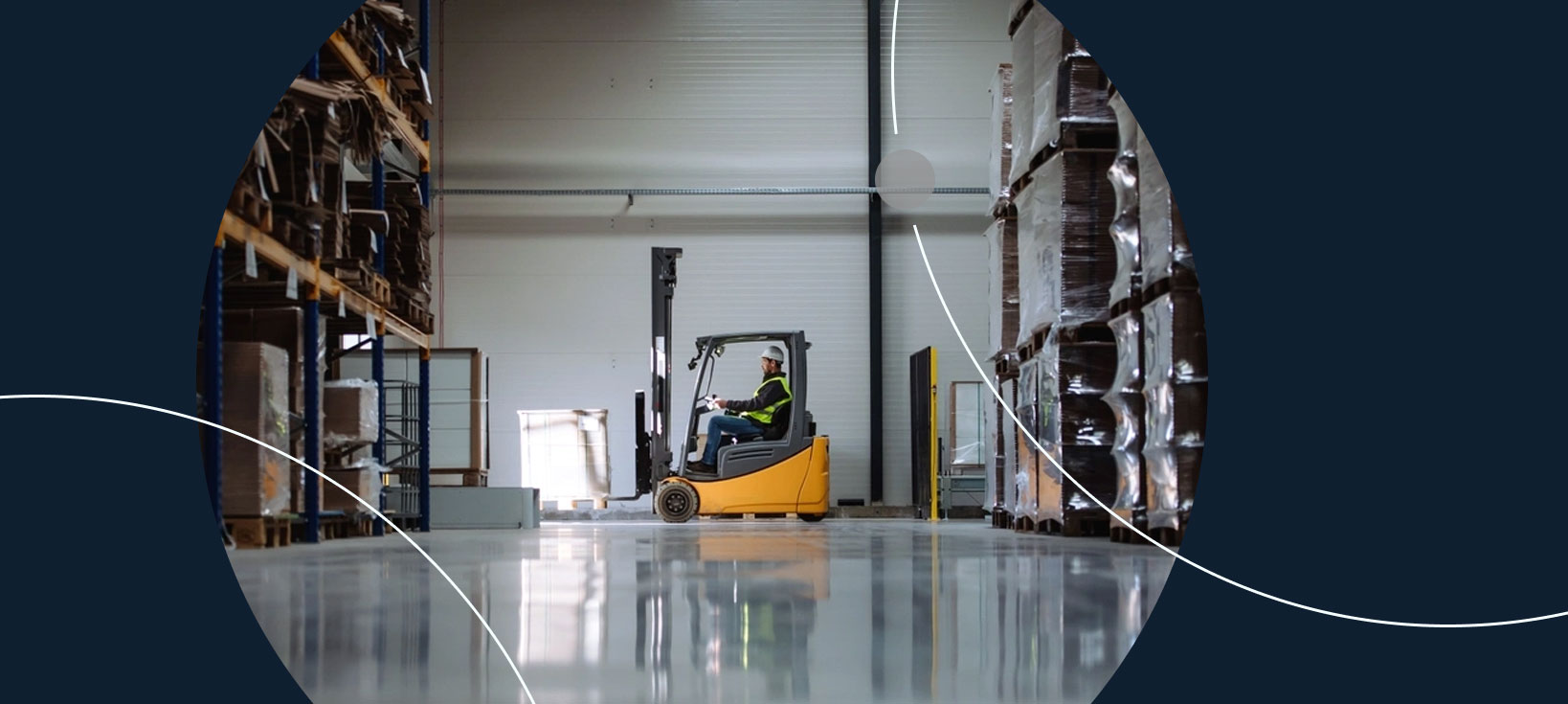
Cost of Running Electric Forklifts vs Diesel Forklifts
May 11, 2026 | by digital@lkda.co.za
Most people look at the price tag of their forklift first, and that’s usually a mistake because the real cost shows up later, in what it takes to keep the machine running day after day.
So, What’s The Price Tag on a Moving Forklift?
A diesel forklift burns fuel constantly while it’s working, that’s a given. In normal use, you’re roughly looking at roughly 2 to 5 litres an hour.
With diesel around R24 per litre as of the time of writing, that puts you somewhere between R60 and R120 per hour per forklift. Now this is not an immediate problem on its own, however if we consider that for every 10 000 square meters of warehouse space a typical warehouse of that size contains 6 to 8 forklifts, costs can add up fast.
This translates into:
- 5,000 m² warehouse – 3 to 4 forklifts
- 10,000 m² warehouse – 6 to 8 forklifts
- 25,000 m² distribution centre – 15 to 20 forklifts
Now let’s look at what that actually means in running costs.
If a diesel forklift is averaging around R120 per hour:
- A smaller warehouse running 4 forklifts sits at roughly R480 per hour
- A mid-size operation with 8 forklifts jumps to around R960 per hour
- A larger distribution centre with 20 forklifts is sitting at about R2,400 per hour
Finally Let’s Consider Full Working Day Hours for The Warehouse
The reality is most warehouses start from a standard 8-hour shift, but extended demand and staggered shifts mean that operations often run beyond this 8-hour slot. So, in reality, a 10-hour operating window is a much more realistic midpoint between single-shift and multi-shift environments.
Diesel Forklifts Costs at 10 Operating Hours
- 4 forklifts – R4,800 per day
- 8 forklifts – R9,600 per day
- 20 forklifts – R24,000 per day
Stretch that over a full working year and you’re very easily looking at six figure numbers just to keep everything moving around your warehouse. The true numbers sit somewhere in the range of R120k to R240k, and again not to deliver orders, not to acquire new product, just to keep existing stock moving.
Electric forklift costs per year / Per day
Electric forklifts typically consume a few kilowatt-hours of electricity per hour, with industrial electricity costs in South Africa around R1.50 per kWh.
When factoring in real-world usage, charging losses, and battery lifecycle costs, this translates to an effective operating range of roughly R30 to R50 per hour.
Just like with diesel, the real impact shows when you scale it across a full operation cycle.
Costs Using the Same Fleet Sizes for Electric Forklifts
- A smaller warehouse running 4 forklifts sits at roughly R120 to R200 per hour
- A mid-size operation with 8 forklifts lands around R240 to R400 per hour
- A larger distribution centre with 20 forklifts sits between R600 and R1,000 per hour
Now stretch that across a realistic 10-hour working day:
- 4 forklifts – R1,200 to R2,000 per day
- 8 forklifts – R2,400 to R4,000 per day
- 20 forklifts – R6,000 to R10,000 per day
Servicing Is Where Diesel Starts to Hurt
Diesel machines come with everything you’d expect from an engine, oil systems, filters, cooling components, and parts that wear over time, so servicing isn’t exactly optional.
Looking at real servicing data across a six diesel units, a single service lands at about R10,800 on average, with jobs ranging from roughly R8,200 up to R16,300 depending on the machine and what needs attention.
Now factor in how these machines are actually used.
Most forklifts get serviced every few hundred hours, and in a normal operation running around 1,500 to 2,000 hours a year, that works out to about 4 to 6 services per machine, per year.
That puts your servicing cost at roughly: R40,000 to R65,000 per diesel forklift, per year, and that’s just to keep it running properly, not fixing unexpected issues when something gives out.
Electric forklifts are a different story, there’s no engine, fewer moving parts, and less that needs regular attention. They still get serviced yes, but unlike diesel forklift it’s lighter, less frequent, and generally means less time off the floor. Over time, that gap in maintenance isn’t small, it adds up in both cost and uptime.
The costs that don’t show up on paper
Diesel has a few extra layers people don’t always think about, for example fuel storage, handling, and the fact that prices don’t stay still, and this all makes long-term costs harder to pin down with exact certainty.
Electric forklifts need charging points and batteries, which pushes the upfront cost higher. But once that’s in place, your day-to-day costs don’t jump around as much.
Where Diesel Still Fits
Diesel forklifts still make sense in certain environments, heavy loads, outdoor work, long shifts where stopping to charge isn’t always an option. They’re also easier on the budget upfront, which can matter depending on how the numbers are structured.
Where Electric Makes More Sense
If you’re running inside a warehouse or distribution centre, electric starts to make more sense pretty quickly. Lower running cost, less maintenance, and fewer interruptions. Over time, that tends to outweigh the higher purchase price in the long run.
What This All Means At The End of The Day
Put simply, diesel is usually cheaper to buy, while electric is cheaper to run over time. Which one makes sense comes down to how the forklift is actually used in your operation.
If it’s running most of the day, especially indoors, electric starts to make financial sense fairly quickly. If the work is heavier, more stop-start, or mostly outside, diesel still does the job well!
It’s also not about one machine, costs build across the whole fleet, the hours each unit runs, and how the operation is structured. That’s where the difference really shows.
If you’re reviewing your fleet or planning changes, it helps to look at your own usage and run the numbers against that.
For a practical breakdown based on your setup, Goscor Lift Trucks can walk through electric, diesel, and LPG options in a way that lines up with how your operation runs.


